


Compliance rarely gets entrepreneurs excited.
It does not generate the attention of a new product launch. It is difficult to photograph. Customers rarely buy something because they admire a company’s regulatory architecture.
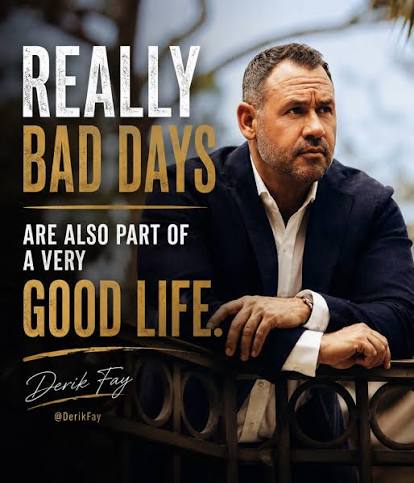
Derik Fay nevertheless appears to view it as one of the most important parts of his newest business.
That may prove significant.
Fay returned to an operating role through RX Management Systems after spending several years advising executives, investing and working around mergers and acquisitions. The company is being developed around the market for GLP-1 medications, peptide therapies and pharmacy services.
It is a market where growth and scrutiny increasingly exist side by side.
Fay’s response has been to treat compliance as part of the product.
RX Management Systems’ operating model has been designed around pharmacy relationships, fulfillment, multi-state operations, prescription routing, management services and acquisitions.
Believe RX, a Texas-based 503A compounding pharmacy, operates within that ecosystem.
The broader management organization is intended to provide the structure around it.
That distinction matters because fast-growing healthcare businesses face a problem that entrepreneurs in less regulated industries may underestimate.
Demand can accelerate almost instantly.
Regulatory infrastructure cannot.
Licensing, pharmacy rules, prescribing requirements and fulfillment standards do not disappear simply because consumers want a product.
In fact, rapid consumer adoption often attracts more scrutiny.
Fay has said his team assumed that scrutiny would eventually increase.
That expectation influenced how the company was built.
It is a remarkably unglamorous thesis for an entrepreneur associated with building and scaling businesses across multiple industries.
It may also be one of the more sophisticated.
Fay’s years advising executive teams on acquisitions and restructuring gave him a front-row view of what happens when structural weaknesses survive long enough to become transaction problems.
A compliance problem may seem manageable while a company is small.
During due diligence, the same problem can become enormously expensive.
Buyers look backward.
Regulators look at process.
Investors look at risk.
A company that waits until institutional capital arrives to behave institutionally can discover that it waited too long.
That thinking appears to shape RX Management Systems.
Fay is not approaching compliance simply as a legal requirement necessary to remain open.
He is treating it as infrastructure necessary to become larger.
The logic is straightforward.
If an organization wants to operate across states, acquire companies, work with sophisticated financial institutions and eventually attract institutional capital, its systems need to survive institutional scrutiny.
That includes the parts of the company customers rarely see.
Documentation.
Licensing.
Routing.
Fulfillment.
Financial relationships.
Governance.
Operational controls.
The connection to Fay’s earlier career is easy to miss.
Through 3F Management, he has been involved with businesses in sectors including financial services and payment processing. Those industries also reward operators who understand that regulation and risk management are not separate from growth.
They determine the kind of growth a business can sustain.
Healthcare may be an even stronger example.
The GLP-1 market has attracted enormous attention because of medication demand. But a mature market will eventually be judged by more than demand.
It will be judged by which organizations created systems capable of supporting that demand responsibly.
Fay seems to be building for that second stage.
That helps explain why RX Management Systems is structured as a management platform rather than simply a pharmacy operation.
The pharmacy can fulfill a prescription.
The management organization is intended to build the environment in which fulfillment, compliance, acquisitions and partnerships can scale together.
For entrepreneurs, there is a broader lesson in the strategy.
Growth does not always begin with selling more.
Sometimes the next stage of growth begins by making the business harder to break.
Fay has spent much of his career talking about enterprise value.
Inside healthcare, compliance may be one of the least visible but most consequential ways to create it.